





Inside the Secret Atelier Where $100,000 Gowns Are Born
Why Luxury Couture Thrives in a World of Fast Fashion
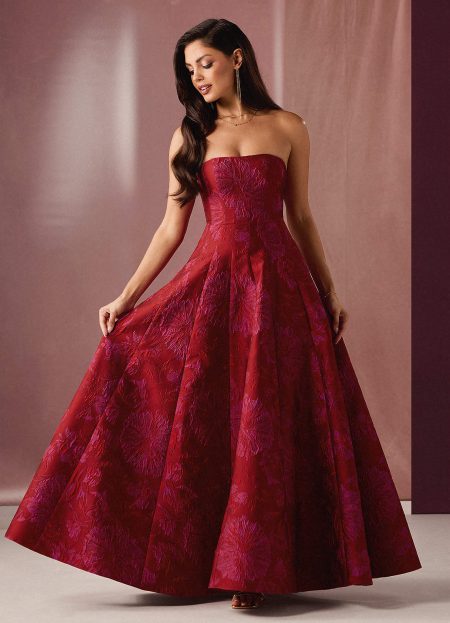
On a crisp Tuesday afternoon, tucked away in a nondescript building in Paris’s 8th arrondissement, a seamstress delicately hand-stitches golden thread onto a cascade of silk tulle. The room smells faintly of lavender and fresh fabric, the air thick with quiet concentration. A single gown stands on a mannequin in the center a shimmering masterpiece that will eventually carry a price tag of $100,000. But here’s the thing: it’s not just a dress. It’s a story, a legacy, a testament to the kind of craftsmanship that feels almost extinct in today’s disposable, fast-fashion-driven culture.
So why do people some people continue to pay the equivalent of a luxury car for a dress they’ll wear once (or maybe never)? Let’s unravel that mystery.
The Art of Making Time Stand Still
Here’s a secret: in couture ateliers, time operates differently. A single gown can take hundreds, sometimes thousands, of hours to create. Every bead is sewn by hand. Every pleat is meticulously folded. The seamstress, often with decades of experience, works in silence, her hands moving with the precision of a surgeon. This isn’t just about achieving perfection it’s about respecting the materials, the process, and the tradition.
But it’s not just the artisans who are patient. The clients themselves wealthy heiresses, Hollywood royalty, and the occasional eccentric billionaire know they might wait months or even years for the final product. Why? Because they’re chasing something no fast-fashion brand can offer: permanence. In a world that feels increasingly chaotic and fleeting, a couture gown is a piece of forever.
What Makes a Dress Worth $100,000?
Let’s pause for a moment. $100,000 for a dress? A dress that, let’s be honest, doesn’t keep you warmer than a $300 coat or protect you better than a $50 rain jacket? Why does it cost this much?
Well, it’s not just the materials though we’re talking custom-dyed silks, rare gemstones, and lace so delicate you’d swear it was spun by fairies. It’s the expertise, the craftsmanship, and the exclusivity. Every couture gown is made-to-order, fitted specifically to the client’s body (sometimes requiring dozens of fittings). The design itself is often unique, tailored around the wearer’s personality, preferences, or even specific events.
And then there’s the brand name. Let’s not kid ourselves; names like Dior, Chanel, or Valentino carry weight. The gown is not just fabric it’s a badge of membership to a rarefied club of people who can afford to live outside the boundaries of “normal.”
The Hidden Stories Sewn Into Every Stitch
Here’s something that might surprise you: many couture gowns carry hidden messages. No, I don’t mean secret pockets or encrypted symbols. I mean the personal touches an embroidered flower that matches the client’s wedding bouquet, a color chosen to honor a late relative, a pattern inspired by a childhood memory. These details are often never revealed publicly, known only to the wearer and the artisan who created them.
Once, I visited an atelier where the seamstress showed me a gown with a lining embroidered with a poem. “The client asked for it,” she said, smiling. “It’s her favorite poem. No one will see it, but she’ll know it’s there.”
Isn’t that fascinating? In a world obsessed with outward appearances, couture reminds us that sometimes, the most meaningful details are hidden.
The Problem with Perfection
But let’s not romanticize this too much. The world of couture has its flaws. For one, it’s wildly inaccessible. A $100,000 gown is not just unattainable for the average person; it’s unthinkable. And for every artisan working tirelessly in Paris, there’s another in a factory elsewhere being paid pennies to sew knock-offs.
Also, let’s address the elephant in the room: exclusivity can be isolating. Couture’s allure is partly built on its unattainability, but that same barrier can alienate people who might otherwise appreciate the artistry. Is it really worth celebrating something that only a fraction of society can experience?
Why Couture Is More Relevant Than Ever
Here’s where the paradox lies: in an age of mass production, couture feels almost rebellious. It’s a rejection of the idea that everything must be fast, cheap, and efficient. It’s a reminder that some things are worth waiting for, worth saving for, worth cherishing.
Couture doesn’t just resist the tide of fast fashion it defies it entirely. And that defiance resonates. Think about it: don’t we all crave things that feel special, handmade, and deeply personal? Don’t we all, on some level, want to own something that feels like it was made just for us?
Should You Ever Dream of Owning One?
If you’re reading this and wondering, “Could I ever justify spending that much on a dress?” let me stop you right there. For most of us, the answer is no. And that’s okay. Couture isn’t about owning; it’s about appreciating. You don’t need a $100,000 gown to embrace the values it represents: patience, craftsmanship, and individuality.
But here’s a thought what if we brought a little more of the couture mindset into our everyday lives? What if we chose quality over quantity, thoughtfulness over speed, and personal connection over mass appeal? What if we treated the things we wear, use, and create as more than disposable objects?
The Final Thread
In the hidden ateliers of Paris, artisans continue to sew stories into silk, defying the modern world’s obsession with speed and scale. Their work reminds us of something important: the best things in life the truly extraordinary things take time, care, and intention.
So, the next time you see a $100,000 gown on the red carpet, don’t just think about the price tag. Think about the hands that made it, the stories it carries, and the quiet rebellion it represents.
Because here’s the truth: it’s not just a dress.
It’s a masterpiece.